Tina Vogel · 13 September 2026
The Evolution of Content Distribution Strategies in Digital Ecosystems
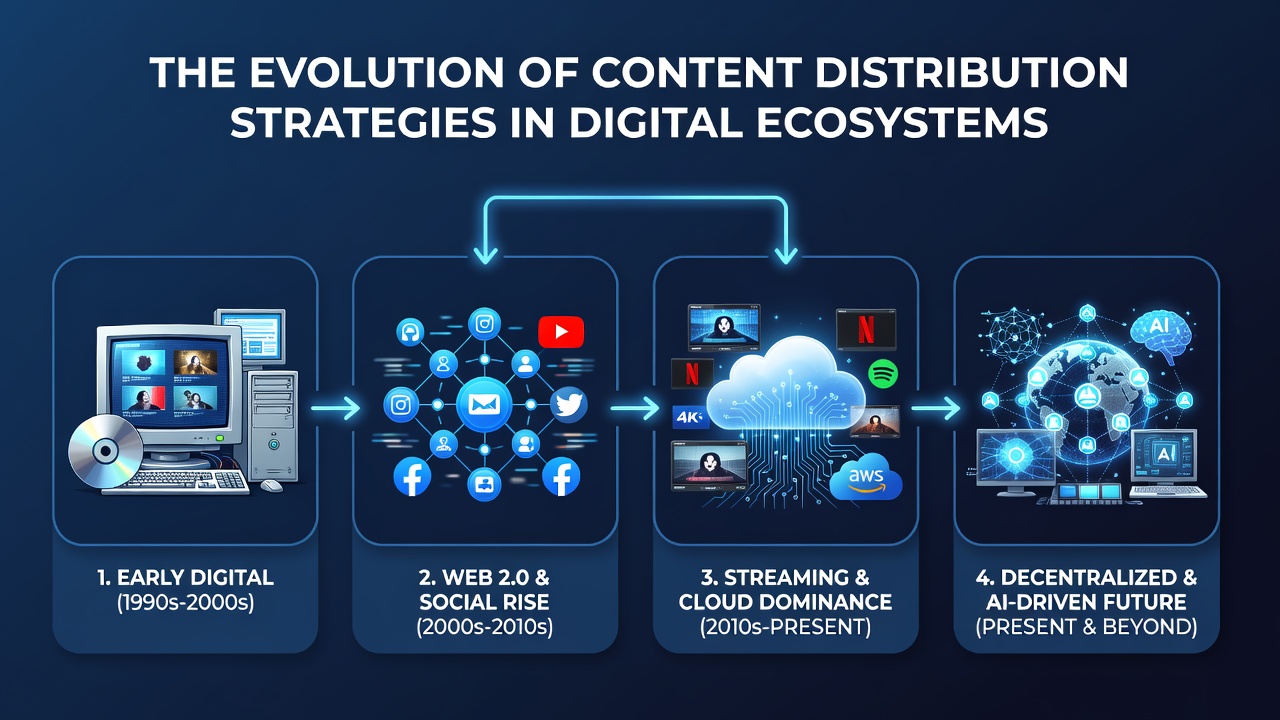
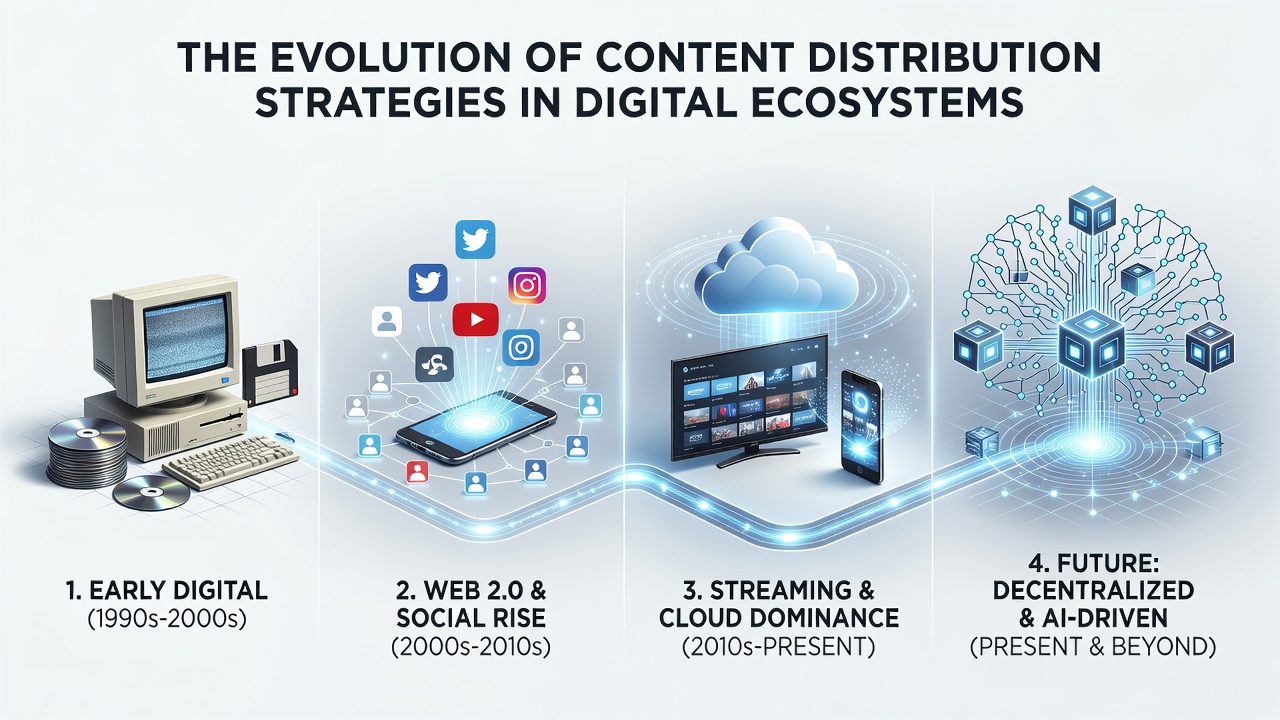
Content distribution in digital ecosystems has shifted dramatically over the past three decades as platforms, algorithms, and user behaviors have changed the ways material reaches audiences. Early strategies relied on static websites and email lists where creators pushed updates directly to subscribers through basic web hosting services and newsletters, and these methods gave way to more dynamic approaches once social networks emerged in the mid-2000s. Researchers at institutions across North America and Europe have documented how search engines and recommendation systems began to influence visibility, with data from the European Commission showing increased reliance on algorithmic feeds by 2010.
Early Digital Channels and Direct Delivery
Initial distribution depended on centralized portals and directory listings that funneled traffic to specific pages, yet the introduction of RSS feeds allowed users to pull content automatically from multiple sources without visiting each site individually. Observers note that email campaigns remained a core tactic through the 2000s because they offered measurable open rates and direct control, while platforms like YouTube started to demonstrate how video content could spread through embedded players and sharing buttons. Figures from Statistics Canada reveal that broadband adoption accelerated these changes by enabling richer media formats to load reliably for wider audiences.
Platform Algorithms and Social Amplification
Social media networks introduced new variables as their ranking systems prioritized engagement metrics over chronological order, which meant creators adjusted posting times and formats to match peak user activity. Data indicates that Facebook's News Feed updates in 2011 and subsequent years altered reach patterns significantly, prompting brands and publishers to experiment with sponsored placements alongside organic sharing. Those who studied these shifts found that cross-posting across Twitter, Instagram, and LinkedIn became standard practice because each platform maintained distinct audience segments and content preferences. What's interesting is how regional regulations began to intersect with these strategies, as the Australian Competition and Consumer Commission examined data practices that affected how content surfaced in local feeds.
Streaming Services and On-Demand Models
The rise of subscription-based streaming transformed distribution further by moving audiences away from scheduled broadcasts toward personalized libraries, and services integrated recommendation engines that suggested titles based on viewing history rather than broad promotions. Reports compiled by academic teams at universities in Canada and the United States highlight how this model increased content variety while reducing the role of traditional gatekeepers like cable providers. Mobile apps extended these capabilities by allowing offline downloads and push notifications that prompted users to return to specific titles, creating continuous engagement loops. One study revealed that global streaming hours surpassed linear television viewing in several markets by the mid-2010s, which encouraged producers to optimize episode lengths and cliffhangers for shorter attention spans.
Data-Driven Personalization and Emerging Technologies
By the early 2020s, machine learning tools refined targeting precision because they analyzed user signals across devices to predict what material would hold attention longest. Government sources in the European Union tracked how privacy rules shaped these practices, requiring explicit consent for data collection that previously operated without such restrictions. As of September 2026, industry reports note continued integration of generative AI for content adaptation, where articles and videos adjust automatically to regional languages and cultural references during distribution. Observers note that decentralized protocols and blockchain-based verification have started to appear in niche ecosystems, offering creators alternative paths that bypass centralized platforms while maintaining provenance records for distributed material.
Conclusion
Patterns across these decades show consistent movement toward greater automation and user-specific delivery, with each technological layer building on the previous infrastructure. Organizations that monitor digital trends continue to collect metrics on reach and retention because those numbers guide investment in new formats and partnerships. The landscape remains shaped by regulatory developments, platform policy changes, and shifts in consumer access to high-speed connections, all of which determine how content moves through interconnected systems.